Central Texas lakes and ponds, from the Highland Lakes chain like Lake Travis and Lake Buchanan to private ponds across Austin, Waco, and surrounding communities, are valuable resources for recreation, irrigation, and wildlife habitat. However, warm temperatures, long growing seasons, and nutrient inputs create ideal conditions for algae blooms and aquatic weed growth. Aquatic Features helps property owners and communities identify and manage these challenges to maintain healthy, attractive waterbodies year-round.
Common Algae in Central Texas Waters
Algae are a natural part of lake and pond ecosystems, but certain types can quickly become nuisance problems in Central Texas:
-
Blue-Green Algae (Cyanobacteria): Frequently forming bright green, blue-green, or even reddish surface scums, these algae can produce toxins harmful to humans, pets, and livestock. Species such as Microcystis and Dolichospermum are commonly observed during hot, stagnant summer conditions.
-
Filamentous Green Algae: Often referred to as “pond moss” or “pond scum,” this algae forms thick, stringy mats along shorelines, docks, and shallow areas. While generally non-toxic, it can interfere with recreation and create odor issues as it decomposes.
-
Planktonic Algae: These microscopic algae can turn water green and reduce clarity, especially in nutrient-rich ponds and lakes during peak summer months.
Early identification allows for proactive management before algae impacts water quality, fisheries, or recreational use.
Aquatic Weeds Common in Central Texas
Central Texas waterbodies support a mix of native and invasive aquatic plants, many of which thrive in warm, nutrient-rich conditions:
-
Hydrilla (Hydrilla verticillata): A highly invasive species that grows rapidly and forms dense mats at the surface, restricting boating, fishing, and water flow.
-
Water Hyacinth (Eichhornia crassipes): A floating invasive plant with thick leaves and lavender flowers that can quickly cover pond surfaces and block sunlight.
-
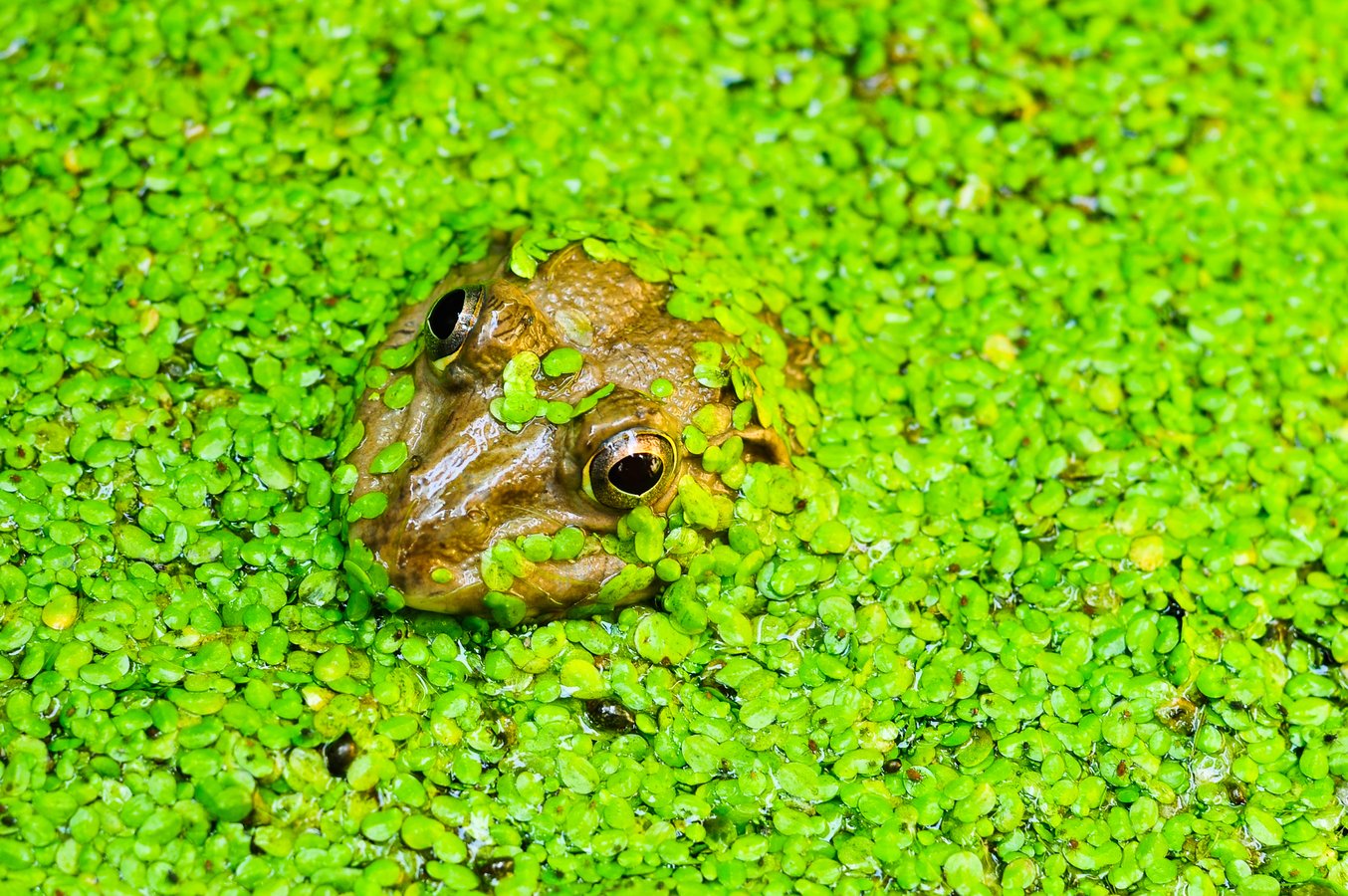
Duckweed & Watermeal: Small floating plants that spread rapidly across still water, limiting oxygen exchange and sunlight penetration.
-
Coontail (Ceratophyllum demersum): A native submerged plant that provides fish habitat but can become dense in shallow areas.
-
Southern Naiad (Najas guadalupensis): A native plant beneficial for fisheries but capable of excessive growth in nutrient-rich ponds.
Identifying which species are beneficial versus invasive is key to maintaining a balanced aquatic ecosystem and avoiding unnecessary or ineffective treatments.
Preventing Algae & Aquatic Weed Problems
Managing algae and aquatic weeds in Central Texas requires a proactive, year-round approach that addresses the conditions driving growth. Aquatic Features provides comprehensive lake and pond management services, including:
1. Nutrient Management
Excess nutrients, particularly nitrogen and phosphorus, fuel algae blooms and aquatic weed growth. Our team evaluates contributing sources and implements strategies such as sediment management and watershed evaluation to reduce nutrient loading.
2. Shoreline Buffer Implementation
We design and maintain native vegetation buffers around lakes and ponds to filter runoff, stabilize banks, and reduce nutrient inflow. These buffers also enhance habitat and improve shoreline aesthetics.
3. Professional Monitoring & Early Detection
Our experts conduct routine inspections throughout the growing season to identify early signs of algae blooms or aquatic weed growth. Early detection allows for targeted, efficient management before problems escalate.
4. Targeted Plant Management
When nuisance or invasive species are present, we apply integrated management strategies including selective herbicide treatments, mechanical removal, and ongoing monitoring. Our approach ensures effective control while protecting beneficial plant life.
5. Water Circulation & Flow Management
Poor water movement can contribute to localized water quality issues. We assess circulation patterns and implement solutions that support overall waterbody health and balanced aquatic conditions.
Benefits of Identification & Prevention
Early identification and professional management of algae and aquatic weeds provides long-term benefits:
-
Water Quality: Maintains clear, balanced water conditions.
-
Recreation: Supports safe and enjoyable boating, fishing, and swimming.
-
Wildlife Habitat: Promotes healthy ecosystems for fish, birds, and other aquatic life.
-
Property Value: Enhances the visual appeal and long-term value of waterfront properties.
At Aquatic Features, we understand the unique challenges of Central Texas waterbodies, including extended growing seasons and high nutrient loads. We partner with property owners, HOAs, golf course superintendents, commercial property managers, and municipalities to identify algae and aquatic weeds and implement science-based, seasonally appropriate management strategies. Healthy lakes and ponds start with understanding what’s growing beneath the surface, and maintaining balance throughout the year.
About Aquatic Features — A Jones Lake Management Partner
Aquatic Features is a trusted provider of comprehensive, science-based lake and pond management services across Texas. Based in Austin, TX, we deliver sustainable solutions to improve water quality, enhance aesthetics, and maintain healthy, high-performing aquatic systems. As a Jones Lake Management Partner, we offer services including aquatic weed and algae control, water quality monitoring, aeration and circulation systems, fountain and water feature maintenance, fisheries management and fish stocking, invasive species control, shoreline stabilization and restoration, sediment management and hydraulic dredging, wetland management, and habitat enhancement. We serve HOAs, municipalities, commercial properties, golf courses, and private lake owners with customized, results-driven programs designed for long-term ecological health and visual appeal. Visit us at www.aquaticfeaturesinc.com